


Getting your ducks in a row: How Weldmar gets the conversation going about being prepared for the end of life
5th May 2026
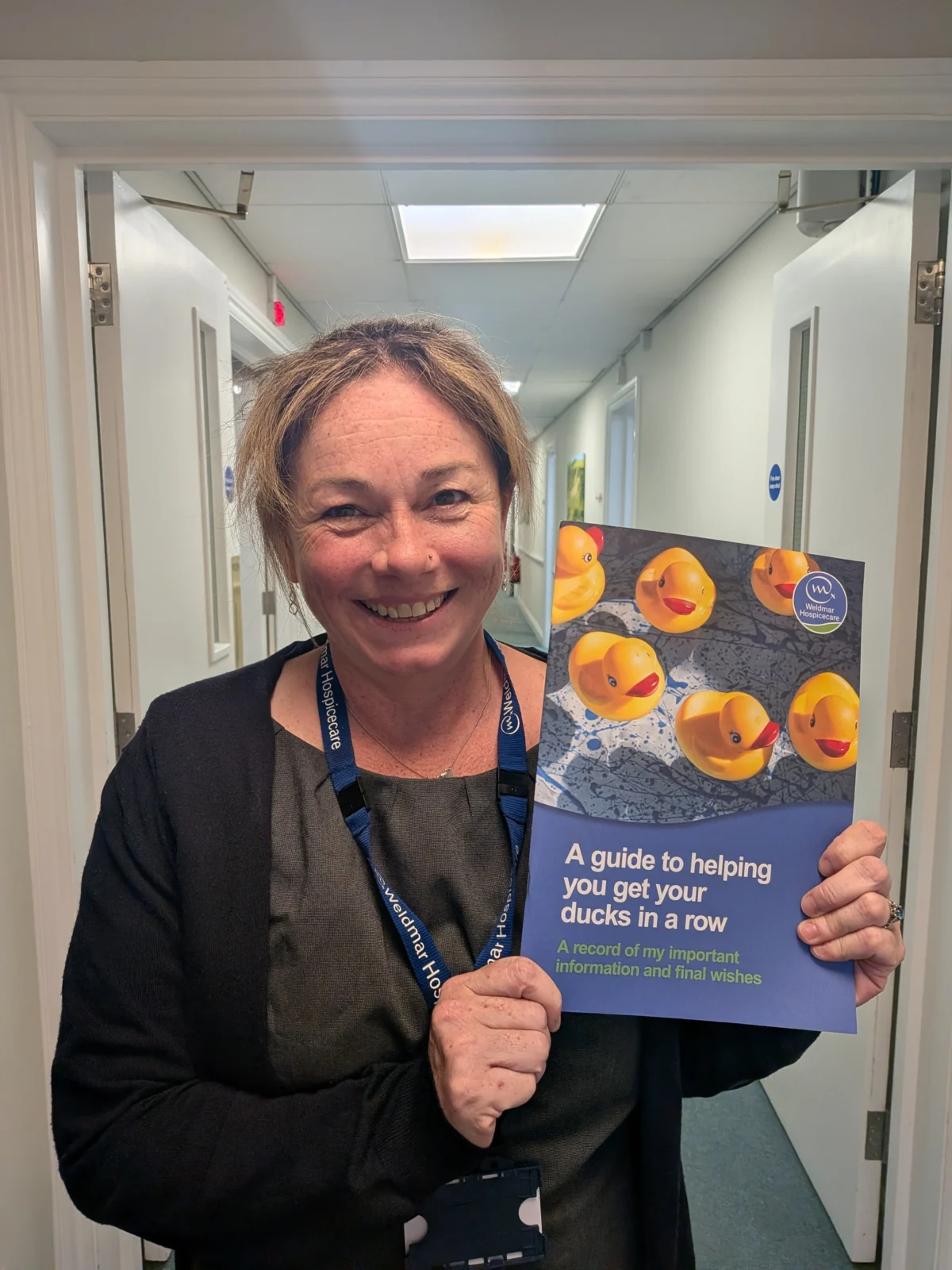
This week is Dying Matters Awareness Week, a national campaign led by Hospice UK with the aim of breaking down the stigma and taboo about talking about death, dying and bereavement – things that affect us all.
The focus this year is about getting the conversation started with family, friends, employers – in fact anyone in your life. Did you know that this is something Weldmar Hospicecare regularly facilitate with those in our care?
“Advance Care Planning is a key part of what we do,” explains Weldmar Community Nurse Lisa Prowse, who is part of the Specialist Hospice at Home South Dorset team. “Many people will think about things like making sure their will is up to date or will plan for their funeral, but often people don’t think about what happens when they become more unwell. We will work with patients, and their families, to ensure we know what their wishes are. We can plan for those wishes, and that will help avoid ‘crisis points’ later on.”
A personal approach for everyone
Some of the common things that are covered in an Advance Care Plan include the preferred place of care and death; whether a patient should be taken to hospital if an escalation in care is needed, and whether they want to be resuscitated. In addition though, they can even include things like what should happen with your pets and what should happen with possessions that have sentimental value.
Lisa says that, like all aspects of Weldmar’s care, there is a very personal approach: “Two people with the same diagnosis might very well have different wishes, so their plan will be as individual as they are. It helps people accept the journey they are on, and giving them a sense of control over their future.
“Families will always want to do right by their loved ones,” adds Lisa, “and having this plan in place makes sure they know what the person wants and how to support them. Not having a plan can prove stressful, especially if there is a ‘crisis’ moment along the way. Very often family members like to stay positive – you hear things like ‘we don’t need to worry about that just now’ – so part of our skills as a hospice nursing team involve judging and assessing the right moments to have these conversations with family members as much as patients.”
“It’s an ongoing process, and is completely flexible. Even when a plan is ‘complete’, we’ll often touch base about it, because things can change. We want to make sure the list of wishes is up to date, and then we and the family can advocate for the patient if, for example, they don’t have the capacity to communicate in the future.”
Providing a supportive environment for conversations to take place
Weldmar’s Patient and Family Support Services team also play their part in making sure patients and loved ones are as prepared as they can be for the difficult times ahead. Chloe Hook is the charity’s Carer Support Coordinator, supporting those family members who become carers, and Sam Baldwin is Weldmar’s Welfare Support Worker, providing practical help and support to patients and loved ones. Chloe and Sam have just prepared a new six week workshop called Ducks In A Row.
“We found a need for an activity that involved both patients and their carers together,” explains Sam. “We’ve got six topics to cover which include how to have difficult conversations, funeral planning and making memories, and getting your affairs in order. Each session will include a practical element, but then a chance to talk and socialise together over a cuppa.”
“Working in groups is really effective in providing a support network, particularly for those who can feel quite isolated. They can talk to others and ‘normalise’ what can be a very difficult experience. We want these sessions to both provide a safe space for people, and empower them too. For the loved ones of patients, there is a lot of pressure. Quite often they will mask their feelings and try to put on a brave and positive front, but here they can be open and themselves.”
The new workshop will have a trail run this year, with Chloe and Sam working with patients and carers who they think would benefit most.
Lisa says that she has seen a change in these conversations during her time as a hospice nurse: “We are finding that more people are choosing to spend their final days in the familiar surroundings of their own home, especially since the Covid pandemic. We’ve even had some patients say they want to have a ‘Living Wake’ – a celebration of their life with friends and family before they die. They’ve become a bit more popular recently.”
You can find more resources on Advance Care Planning, and ‘getting your ducks in a row’ from Weldmar Hospicecare, using the links below.
Related Reading

Getting Your Ducks in A Row
A useful, downloadable document that will help everyone understand your wishes, and where you can share lots of practical information, such as your contacts, key documents, possessions and property, and finances.
Learn more
Advance Care Planning
Resources for Advance Care Planning: the process of person-centred discussions between an individual and their care providers about their preferences and priorities for future care.
Learn more
Personal stories and latest Weldmar news
Find all of our latest news, developments, and personal stories of those in our care.
Learn more


